When children can't say how they feel - how art helps express big emotions in early years
Shamima's Workshop Early Childhood Education

When children can't say how they feel

Using Art to Help Children Express Big Emotions in Early Years

By Shamima Fowzee | Early Years Trainer & Creative Art Practitioner

 There’s a quiet kind of struggle that often goes unnoticed—the child who can’t explain what’s going on inside them. Not because they don’t want to, but because they simply don’t have the words.

As adults, we rely heavily on language to express emotions: “I feel overwhelmed,” “I’m anxious,” “I’m frustrated.” But for many children, especially in the early years—feelings don’t come out in words. They come out in behaviour.

In early childhood, emotions are often bigger than words. A child may cry, throw objects, withdraw, or become unusually quiet—not because they are “misbehaving,” but because they do not yet have the language to explain what they feel. What we see on the outside is often just a small glimpse of what is happening within.

As practitioners and parents, we naturally ask:
  • “What’s wrong?”
  • “Can you tell me how you feel?”

But what happens when they can’t?

What happens when the feeling is there, but the words are not? This is where our understanding must shift. Instead of expecting children to explain, we begin to observe, listen, and interpret differently. We recognise that behaviour is not something to correct immediately, but something to understand.

And this is where art becomes a powerful voice. Because when children cannot say how they feel,
they can show us—through colour, movement, marks, and creation.

Art becomes their language.

   On this page:

  • Why Children Struggle to Express Emotions?
  • Art as a Language of Emotion
  • 5 powerful ways to support emotional express
  • Final Thoughts

Reflective Prompt

Whether at home or in a setting, think about a child who struggles to express emotions.
What might they be feeling—but unable to say?
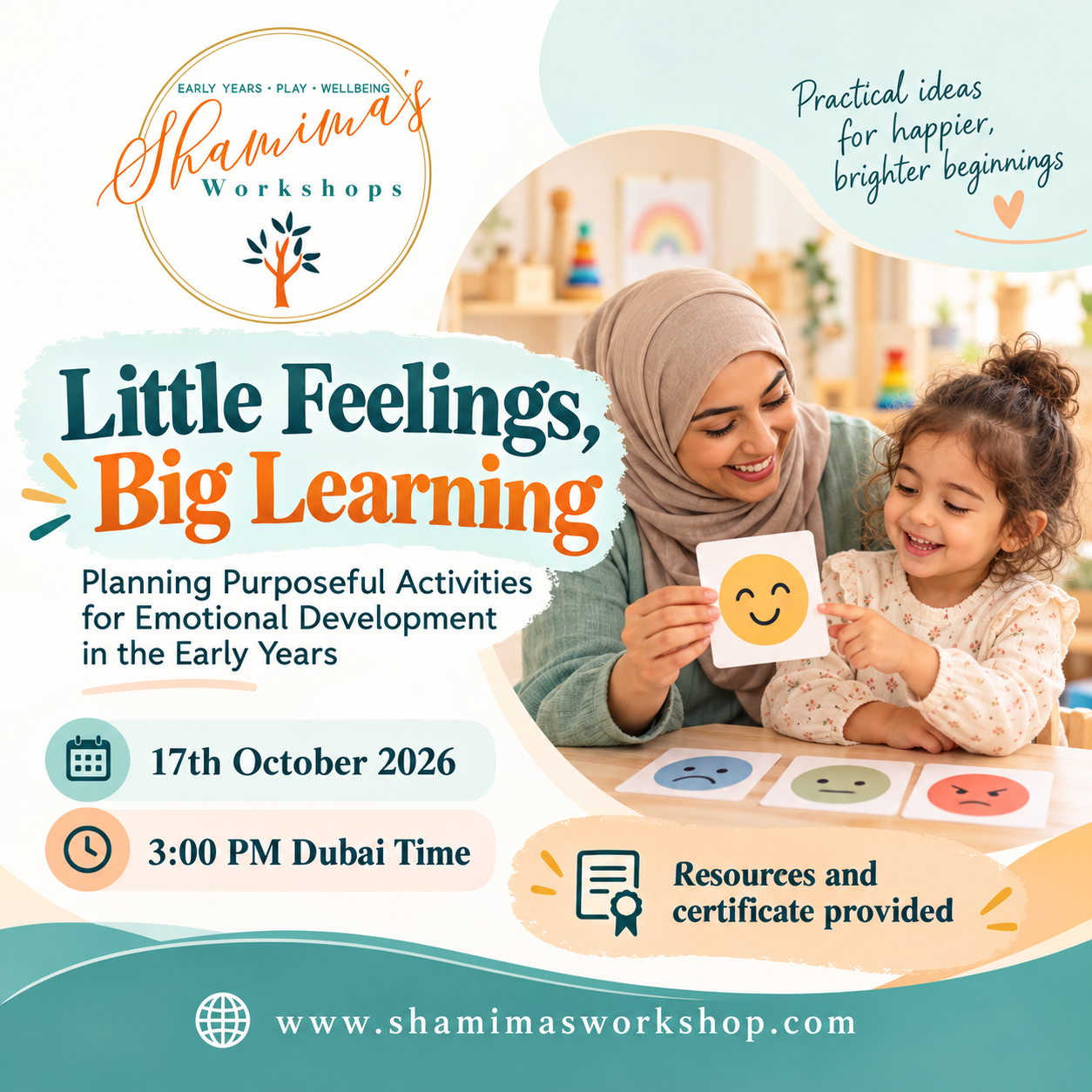
This is something many practitioners struggle with, and it’s something I’ll be exploring in more depth in an upcoming CPD session.
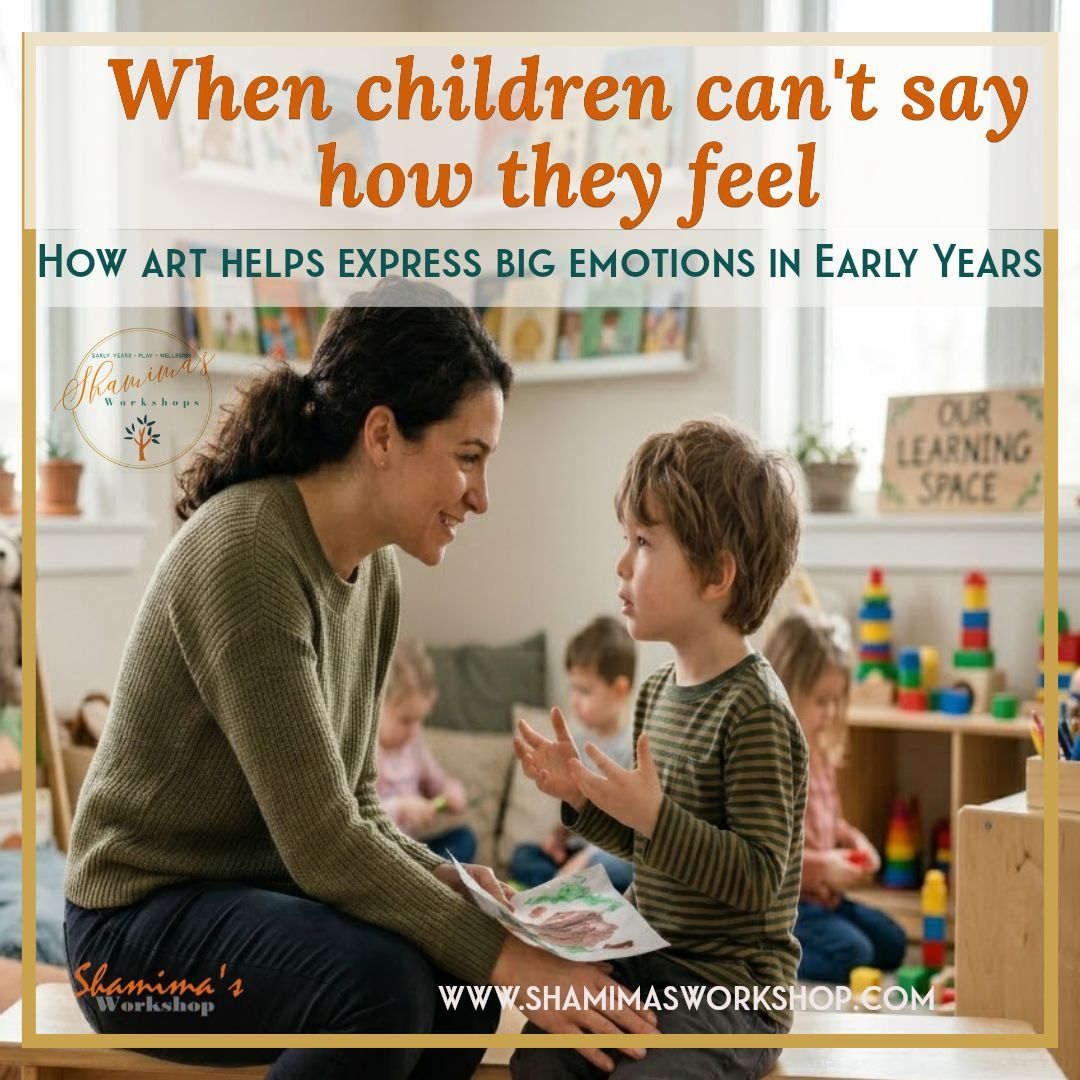
Supportive communication between child and adult: An image showing a child and a parent or caregiver engaged in close, supportive conversation, with the adult listening attentively. This focuses on the context that enables expression.

Why Children Struggle to Express Emotions

According to the Early Years Foundation Stage (EYFS), supporting children’s Personal, Social and Emotional Development (PSED) is a prime area of learning. However, emotional expression is not always verbal. Children may express feelings through behaviour, body language, play and creative exploration.

In the early years, emotional expression is not as simple as “telling how you feel.” It is a complex developmental process that is still forming. Children are not being difficult when they cannot express emotions, they are still learning how to understand, process, and communicate what is happening inside them. Children aren’t born with emotional vocabulary, it develops over time. Several factors can make it harder:

1. Limited Emotional Language:
Young children simply don’t have the words yet. “Mad,” “sad,” or “happy” may be all they know.

2. Overwhelming Feelings:
Big emotions can flood the brain. When this happens, thinking and speaking become difficult.

3. Lack of Safe Expression: 
If a child feels judged, ignored, or misunderstood, they may stop trying to communicate altogether.

4. Neurodiversity or Additional Needs:
Some children (e.g., those with autism or sensory processing differences) may experience and express emotions in less typical ways.

Reflective Prompt

When we take a moment to reflect, many of us can think of a child who struggled to express how they felt.

           A child we tried to support… but weren’t quite sure how.
           A moment where we responded—but later wondered if there was a better way.


Perhaps the question isn’t whether we care enough— but whether we’ve been shown how to respond in a way that truly supports the child.


This is something many practitioners experience, and it’s exactly what I’ll be focusing on in my CPD session. I’ll be sharing practical ways to use approaches like art more intentionally—so we can better understand what children are communicating and respond with more confidence.

Art as a Language of Emotion

When words are not yet available, children do not stop communicating, they simply change the way they express themselves. Art becomes one of the most powerful forms of this expression. For young children, drawing, painting, and mark-making are not just creative activities. They are a natural language, a way of thinking, feeling, and making sense of the world.

Why Art Works as Emotional Expression:
Art allows children to:
  • Express feelings without needing vocabulary
  • Release emotions in a safe, non-verbal way
  • Represent experiences they may not fully understand
  • Process events at their own pace
Unlike conversation, art does not require immediate answers,  correct words or direct explanations. This makes it especially valuable for children who feel overwhelmed, anxious, frustrated and confused.


What Children Communicate Through Art:
Children often communicate emotions through:
  • Colour choices (e.g. dark, bright, mixed)
  • Movement and marks (fast, heavy, repetitive, controlled)
  • Use of space (small drawings, large strokes, empty areas)
  • Themes and symbols (family, isolation, storms, shapes)
Important:
These are not fixed meanings. The role of the practitioner is not to interpret immediately, but to observe patterns and remain curious.


The Process Matters More Than the Product:
In emotional expression, the value of art lies in the doing, not the outcome.

A scribble is not “just a scribble.” It may be:
A release of frustration
A moment of calm
An attempt to organise thoughts


The Role of the Adult: Witness, Not Director:
When a child is expressing emotion through art, the adult’s role is to:
  • Be present
  • Observe without interrupting
  • Use gentle, descriptive language
  • Offer emotional safety
For example:
“I can see you’re using lots of strong lines.”
“You’ve chosen many colours today.”

This approach:
  • Validates the child’s experience
  • Keeps the space safe
  • Encourages deeper expression
Helping children who can’t express their feelings? Discover practical early years strategies and how art supports emotional expression and behaviour.

Ready to take the next step?

If you’ve ever felt unsure how to support children who struggle to express their emotions, this session is designed for you. Many practitioners tell me:

“We know art helps… but we’re not sure how to use it intentionally to support emotions.”

If that sounds familiar, you’re not alone. That’s exactly why I created a live CPD session designed specifically for early years practitioners and parents to move beyond theory and into real, practical strategies you can use immediately in your setting. If you want to confidently use art as a tool for emotional wellbeing in your setting, I invite you to join my live CPD session.

🎓 Live CPD Session

"When Children Can’t Say How They Feel: Practical Strategies for Early Years."

Delivered by: Shamima’s Workshop


In this session, you will learn:

  • What children’s behaviour is really communicating
  • What to say (and what not to say) in emotional moments
  • Simple, effective strategies to support regulation
  • How to use art as a tool for emotional expression and understanding


This is not just theory—it is practical, reflective, and immediately applicable in your setting. Join the live CPD session and start making a real difference in your practice.

Booking link here

 Final Thoughts

When children cannot say how they feel, they won’t say, “I’m struggling.”they will show you—in their play, their behaviour, and their art. As practitioners, our role is not to correct or control, but to observe, understand, and respond with empathy.

Because sometimes…

A scribble is not just a scribble. It is a feeling, waiting to be understood.

                     GRAB YOUR DOWNLOADS!

To support your daily practice, I’ve created a practical resource for you:

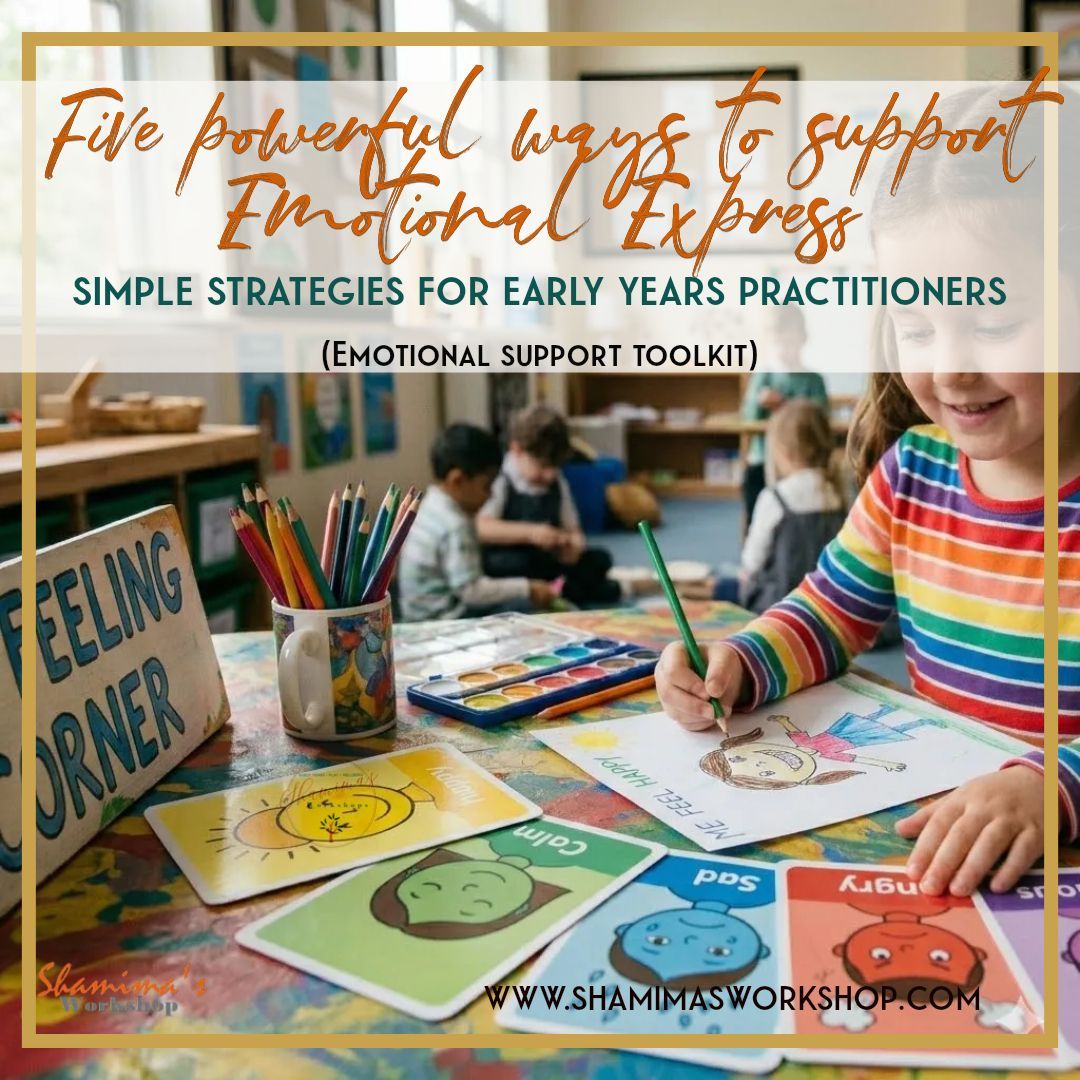
5 Powerful Ways to Support Emotional Expression”. This guide will help you:
  • Five powerful ways to support children's emotional expression
  • Ask the right reflective questions
  • Respond to children’s artwork meaningfully
  • Build confidence in using art for emotional wellbeing
FREE GUIDE

Grab your download!

10 powerful questons to ask while reading

Welcome

Hi, i am Shamima Fowzee, an early years educator, trainer and consultant. I Share ideas, inspiration, & resources for play-based, inquiry-led learning. Find out more about me here.

SHOP NOW

RECENT POST

Art therapy for children, early years art activities, emotional wellbeing in early childhood.
by Shamima's Workshop Early Childhood Education 14 December 2025
Discover how art therapy supports emotional, social, and cognitive development in young children. Learn 7 simple art therapy activities for children aged birth to 5 years by Shamima’s Workshop.
Learn the cycle that transforms observation into effective teaching.
by Shamima's Workshop Early Childhood Education 6 May 2025
Learn how the Observation, Assessment and Planning (OAP) cycle supports effective early years practice. Develop skills to observe, assess, and plan meaningful learning experiences aligned with EYFS and Development Matters.
by Shamima's Workshop Early Childhood Education 22 April 2025
As an early childhood practitioner, you will frequently come across the term "assessment". Assessment is part of early years practitioners' day-to-day interactions with children. In the early years, assessment is the process of gathering information about a child, analyzing that information, and then using the information to arrange educational activities that are at the level of the child and also benefit the child. EYP continually makes judgments about children's learning and development and uses the information they gather to help children to progress. Children, too, make judgments about what they are good at, what they enjoy doing, what they can do now with little help, and what they would like to be able to do in the future. “ Assessment plays an important part in helping parents, carers and practitioners to recognise children’s progress, understand their needs, and to plan activities and support. “ EYFS Framework 2024, section 2.1, page 19 The most common types of assessment are formative and summative. As a preschool teacher, you might be familiar with these terms but still need clarification about how they work.
 Understand the role of assessment in helping parents & educators recognize children's progress.
by Shamima's Workshop Early Childhood Education 21 April 2025
This blog explores the assessment opportunities applied by early years educators to ensure the unique needs of each child and understand that there are different assessment methods and techniques, which inform what we know about children’s progress.
Show More

   How can I thank you? Spread the word!

For everyone who is passionate about the importance of Early Years.